
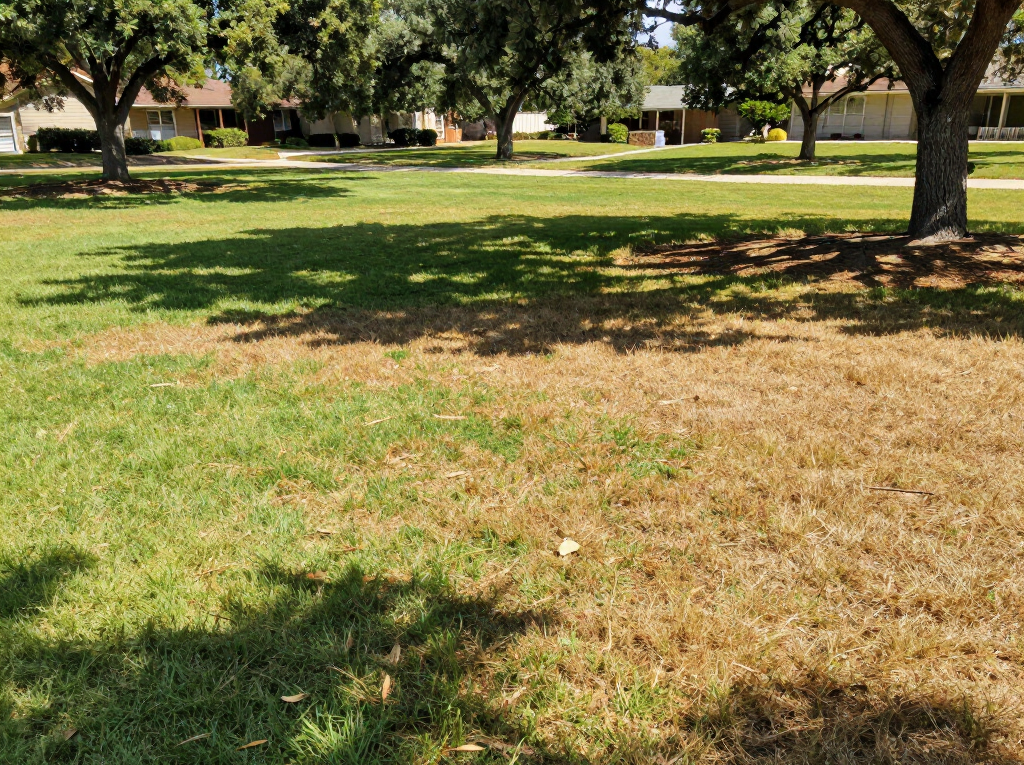
If your grass is turning brown in Texas, it’s usually due to heat stress, improper watering, soil issues, or disease. In Frisco and surrounding areas, extreme temperatures and inconsistent rainfall make lawns especially vulnerable. The good news is that most causes can be identified and corrected with the right approach.
Understanding the root cause is the first step to fixing the problem.
Texas summers are intense, and prolonged heat can push grass into survival mode.
Signs include:
Grass like Bermuda can recover, but extended stress without proper care leads to damage.
Both overwatering and underwatering can cause browning.
Watering deeply and less frequently is the most effective approach.
Clay-heavy soil, common in Frisco, can restrict:
Compacted soil often leads to patchy, stressed lawns.
Fungal diseases thrive in warm, humid conditions.
Common signs include:
According to Texas A&M AgriLife Extension – https://agrilifeextension.tamu.edu/, proper lawn care practices significantly reduce disease risk.
Insects like grubs can damage your lawn from below the surface.
Watch for:
Cutting your grass too short weakens it and exposes soil to heat.
This leads to:
To fix brown grass effectively, you need to diagnose the issue:
If the cause isn’t clear, professional evaluation can help prevent further damage.
Aeration can help relieve compaction and improve nutrient absorption.
Fertilization and weed control should be timed correctly based on the season and grass type.
Targeted treatments prevent the problem from spreading and causing long-term damage.
Keep your grass slightly taller to:
Not all brown grass is a problem.
In some cases, grass enters dormancy during extreme heat or drought. Dormant grass:
Understanding the difference between dormancy and damage is important.
Consistent maintenance is the best way to avoid brown grass:
Working with a professional service like Lawn Care Services – https://djtigerslawn.com/ ensures your lawn receives the right care year-round.
Yes, if the roots are still healthy. Proper watering and care can help it recover.
Typically 1–2 times per week with deep watering, depending on weather conditions.
Yes. Excess water can lead to root rot and fungal diseases.
Only if the issue is nutrient-related. Applying fertilizer at the wrong time can worsen the problem.
If your lawn is struggling and you’re not sure why, D & J Tiger’s Lawn Care & Landscape can help diagnose the issue and restore your yard to full health.
Their team understands the unique challenges of North Texas lawns and provides targeted solutions that work.
Call today or request a free estimate. Serving Frisco and surrounding communities since 2008.